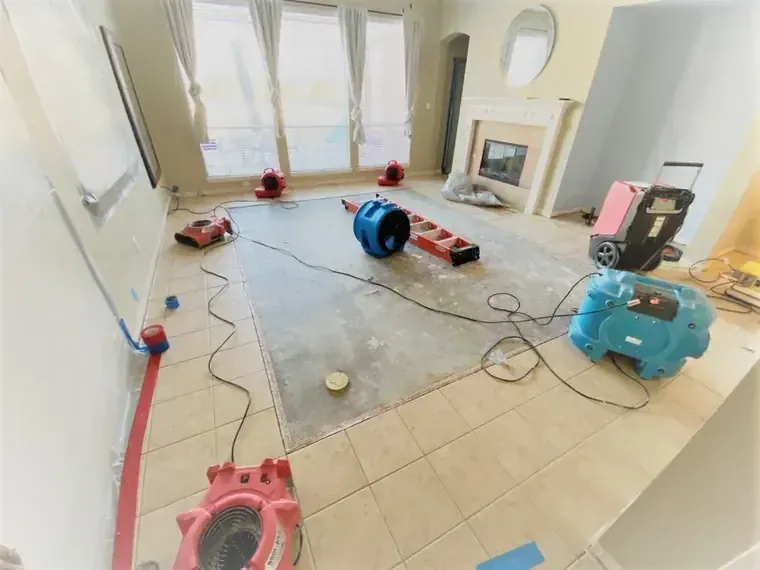
Lee's Summit warns that heavy rain over a short period can cause localized flooding and advises directing downspouts and French drains away from foundations. After rainwater enters a building, the owner needs a record of the interior conditions as well as the exterior concern. A useful drying file follows the entry route, affected materials and changes observed through cleanup and repair preparation.
Key takeaways
- The first photographs should locate water entry before removal changes the visible footprint.
- Material readings need identifiable locations that can be revisited.
- Cleaning and removal decisions should explain which surfaces remain for drying.
- Equipment changes are most useful when their purpose is recorded.
- The completion handoff should connect final observations to the original wet areas.
Preserve the first view of the water path
An owner can begin the file with photographs from safe positions that show the room entrance, the visible wet edge and the likely point of entry. The images are most useful when a doorway or another fixed feature makes their location recognizable to someone who was not present.
The city advises keeping children and pets away from floodwater. Interior documentation should follow the same practical access restriction, leaving unsafe or submerged areas for professional assessment instead of making a photograph more important than avoiding contact with the water.
A short written account can add what the images miss, such as which room showed water first and whether additional entry was seen later. The structural drying assessment uses that starting information to connect subsequent material checks with the original incident.
- Include a recognizable doorway in the opening photographs.
- Record the first observed entry location.
- Leave unsafe water contact outside the homeowner's documentation task.
Keep outdoor observations in their own part of the file
Lee's Summit recommends keeping leaves, grass clippings, branches and trash out of storm drains, and advises grading yards away from foundations. The property's exterior notes can record conditions observed safely around the entry area, with photographs retained for the person evaluating the outdoor water path.
The city also lists gauges for Cedar Creek at Chipman Road and the Little Blue River at Lee's Summit Road. Those named monitoring locations provide a local setting for rain awareness, while the incident file focuses on the water observed at the affected building.
Exterior correction and indoor mitigation should have distinct work descriptions. The owner can then see whether an outstanding task concerns the route water used to reach the building or the materials already wet inside, making coordination easier when different professionals handle those scopes.
- Store exterior photographs beside the entry description.
- Identify the professional handling the outdoor condition.
- Keep the interior work scope connected to observed room damage.
Create a material map after accessible water is removed
Water extraction changes the appearance of a room by removing pooled liquid. A material map preserves the extent of the affected floor, wall base and contents so the absence of a puddle does not erase the locations that still require attention.
The technician labels points using recognizable room features and names the material at each one. A wall base beside a door and the floor beyond that door should have separate entries, allowing later visits to compare the same surfaces rather than an approximate area.
Photographs taken after extraction can show the marks or labels used for the map. Pairing those images with the first condition photographs gives the owner a clear explanation of how the visible water footprint became a set of specific inspection and monitoring locations.
- Name the material at each marked observation point.
- Use fixed room features to locate repeat checks.
- Photograph the cleared floor and newly visible edges.
Explain what was removed before measuring progress
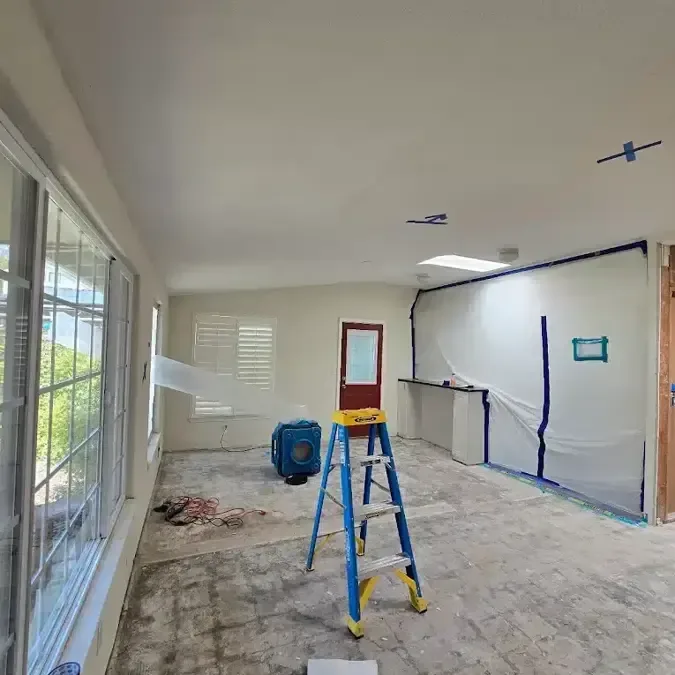
A drying record needs to identify the assembly that actually remains after cleanup. If a floor covering, lower wall section or wet contents were removed, the notes should describe the reason and the exposed surface beneath, so subsequent readings have a clear material context.
Rainwater that traveled across exterior ground also requires contamination assessment. The removal and cleaning account should explain how contacted materials were handled before the retained surfaces entered monitored drying, keeping the sequence understandable for an owner reviewing the file later.
The stormwater cleanup scope can supply that connection between entry, cleaning and retained materials. A technician should record unexpected findings as access improves, especially when a removed layer reveals another affected surface that was absent from the initial room sketch.
- Identify removed finishes by room and position.
- Describe newly exposed surfaces in the same record.
- Connect cleaning decisions with the materials retained for drying.
Make each follow up visit comparable
A useful monitoring entry identifies the location, material and measurement method clearly enough for the next visit to repeat it. Consistency allows the technician to evaluate change at the affected assembly, rather than relying on impressions about the room feeling drier or looking cleaner.
Indoor conditions and equipment arrangement add context to those material observations. The record should note significant changes in access or operation, including a moved obstruction or interrupted equipment, so a different reading can be interpreted alongside what happened in the space between visits.
The owner needs plain explanations of the results. A specific note that identifies the remaining damp section and the planned adjustment is easier to act on than an unexplained collection of readings, especially when repair appointments depend on access to that same section.
- Return to the labeled material points.
- Record changes in access and equipment operation.
- Explain the next action for a location that needs more work.
Document decisions when the plan changes
A drying project may reveal a concealed wet layer only after furniture or a finish is moved. The technician should add that finding to the map and explain whether it changes the access, removal or equipment plan, preserving the connection between new information and new work.
If another rain event brings fresh water into the room, that change belongs in the incident record with its location and observed path. Keeping it separate from the original footprint helps the team reassess the source condition and understand why an earlier drying trend may have changed.
The owner should receive a revised explanation when the work expands or an opening is needed. A clear decision note identifies the surface involved, the finding that prompted the change and the repair consequence, giving the household a clear explanation of the proposed work before the next task begins.
- Add newly exposed wet layers to the room map.
- Record renewed entry as a changed project condition.
- Explain the repair effect of additional access work.
Build the final handoff around the original locations
The completion file should return to the points established near the beginning of the work. Final photographs and material observations can then be compared with the original map, showing how each identified area was addressed and what remains for the contractor restoring the finishes.
An exterior concern may still require a separate appointment, and the handoff should make that outstanding work clear. The interior record describes the completed cleanup and retained material condition, while the source repair description accounts for changes intended to address the entry route.
The owner can keep the room map, cleanup scope, monitoring notes and final images together as the practical history of the loss. That organized account supports future maintenance and repair conversations because another professional can follow the water path without reconstructing it from scattered messages.
Questions
Why keep photographs from before and after extraction?
The initial images preserve where open water was visible. Later photographs show exposed edges and measurement locations, allowing the room's original condition to be compared with the surfaces selected for monitoring.
Should the record include equipment movement?
A change in placement or operation helps explain the conditions between visits. Including it beside material observations gives the technician context for interpreting the next set of results.
What if a hidden wet layer is found later?
The technician should identify it on the map and describe the effect on the scope. The owner then has a written connection between the discovery, additional work and any resulting finish repair.
What makes a drying handoff useful for repairs?
It identifies the retained assembly, completed work and surfaces still awaiting replacement. Final images tied to the original room locations let the repair contractor understand exactly where mitigation ended.